Bitcoin Myths Busted: Separating Fact from Fiction
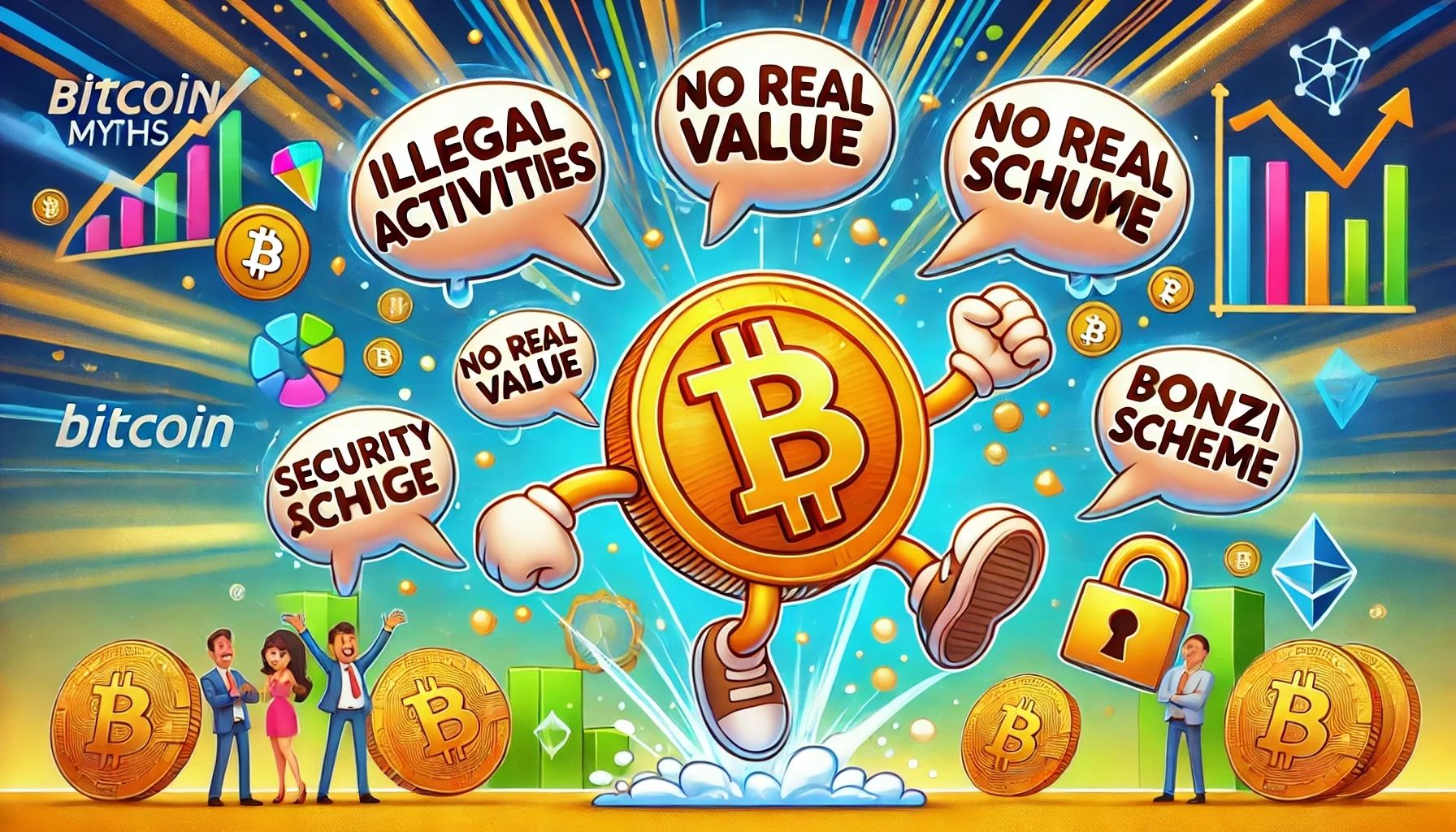
Bitcoin has emerged as one of the most revolutionary financial innovations in recent history, transforming the way we think about money and digital assets. Despite its growing popularity, Bitcoin remains a misunderstood and controversial topic. Myths and misconceptions often cloud public perception, preventing individuals from fully embracing its potential.
This article aims to separate fact from fiction by debunking some of the most common myths about Bitcoin.
Myth 1: Bitcoin is Only Used for Illegal Activities
The belief that Bitcoin is primarily used for illegal purposes is one of the oldest and most persistent myths. While it’s true that Bitcoin was once associated with certain illicit marketplaces, this narrative fails to reflect the cryptocurrency's legitimate uses and advancements.
Origin of the Misconception
Bitcoin gained early notoriety through platforms like the Silk Road, where it was used as a means of anonymous payment for illegal goods and services. The pseudo-anonymous nature of Bitcoin transactions, coupled with limited mainstream understanding, fueled the misconception that Bitcoin was inherently linked to criminal activity.
The Reality
In reality, Bitcoin is now widely used for lawful purposes and has seen significant adoption by mainstream businesses. Companies like Microsoft, PayPal, and Tesla have embraced Bitcoin as a payment method. Furthermore, the transparent nature of Bitcoin’s blockchain makes it less attractive for illegal activities compared to cash, as transactions can be traced and audited publicly. Law enforcement agencies have successfully tracked and prosecuted illicit activities involving Bitcoin, proving its transparency.
Myth 2: Bitcoin Has No Real-World Value
Many skeptics argue that Bitcoin has no intrinsic value, dismissing it as a speculative bubble. However, this perspective overlooks the fundamental principles that give Bitcoin its worth and its practical applications in the modern economy.
Understanding Value in Digital Assets
Value is subjective and is often determined by what people are willing to exchange for an asset. Bitcoin derives its value from its decentralized nature, scarcity (capped at 21 million coins), and utility as a medium of exchange. Just like gold, Bitcoin’s value is rooted in trust and widespread acceptance.
Comparison to Traditional Assets
Bitcoin shares several characteristics with gold, often referred to as “digital gold.” Both are finite in supply, resistant to inflation, and operate independently of government control. However, Bitcoin offers advantages like ease of transfer, divisibility, and storage, making it more versatile than traditional assets in certain contexts.
Practical Uses of Bitcoin
Bitcoin is far from being a theoretical concept—it has real-world applications. It is used for cross-border payments, remittances, and as an investment vehicle. Small businesses and e-commerce platforms are increasingly adopting Bitcoin due to its low transaction fees and global accessibility.
Myth 3: Bitcoin Is Not Secure
Bitcoin often faces criticism over its security, with skeptics suggesting it is vulnerable to hacks or fraud. However, this myth disregards the advanced technologies and protocols that underpin Bitcoin. The blockchain technology at its core ensures an unprecedented level of security, making Bitcoin one of the safest financial networks ever created.
The Blockchain Technology
Bitcoin’s security is built on blockchain technology, which functions as a decentralized ledger. Every transaction is recorded in blocks, which are then linked together in chronological order. Each block is cryptographically secured, making it virtually impossible to alter past transactions. The consensus mechanism used in blockchain requires agreement across the network, ensuring data integrity and preventing unauthorized changes.
Examples of Security Features
Bitcoin employs several advanced security features, such as decentralization and cryptographic protocols. Unlike centralized systems, Bitcoin is maintained by a global network of nodes, making it resistant to single points of failure. Transactions are secured using public and private keys, while mining ensures the blockchain remains tamper-proof. These mechanisms make Bitcoin a highly secure system, even against sophisticated attacks.
Myth 4: Bitcoin Is Bad for the Environment
Bitcoin has been criticized for its environmental impact, with opponents claiming its mining process consumes excessive energy. While energy consumption is a valid concern, the narrative often lacks context and ignores ongoing efforts to make Bitcoin mining more sustainable.
Energy Usage of Bitcoin Mining
Bitcoin mining is energy-intensive because it relies on a proof-of-work mechanism. Miners solve complex mathematical puzzles to validate transactions and secure the network. However, much of this energy usage comes from renewable sources, and the overall impact is comparable to other industries like traditional banking.
Advances in Green Mining
The Bitcoin mining industry is actively adopting green technologies to reduce its carbon footprint. Renewable energy sources like solar, wind, and hydroelectric power are increasingly being used to mine Bitcoin. Innovations like heat recovery from mining rigs further demonstrate the industry's commitment to sustainability.
Comparing Bitcoin’s Impact to Other Industries
Critics often overlook the environmental cost of other industries. Traditional financial systems and data centers consume significantly more energy than Bitcoin. By putting Bitcoin's energy usage into perspective, it becomes clear that its impact is relatively small and improving rapidly.
Myth 5: Bitcoin Will Be Banned Everywhere
Many believe that Bitcoin faces an imminent global ban due to its decentralized nature and challenges to traditional financial systems. However, this myth exaggerates the regulatory challenges Bitcoin faces, as most governments are moving toward regulation rather than prohibition.
Regulatory Challenges
Some countries, such as China, have implemented strict regulations or outright bans on Bitcoin. These decisions often stem from concerns over capital flight, energy consumption, or competition with state-controlled currencies. However, such bans are exceptions rather than the rule.
Bitcoin’s Legal Status Globally
Around the world, Bitcoin's legal status is evolving. Countries like the United States, Japan, and Germany have embraced Bitcoin by implementing clear regulations. These measures foster innovation while addressing concerns about fraud and misuse. The trend points toward broader acceptance rather than global prohibition.
Myth 6: Bitcoin Is a Ponzi Scheme
A common misconception about Bitcoin is that it operates as a Ponzi scheme, promising high returns while benefiting early adopters. However, this myth fails to account for the decentralized and transparent nature of Bitcoin, which fundamentally differentiates it from Ponzi schemes.
How Ponzi Schemes Work
Ponzi schemes rely on a central operator who pays returns to older investors using funds from newer participants. These schemes inevitably collapse when new investments dry up, leaving many investors with losses.
Why Bitcoin Is Different
Bitcoin is not controlled by a central entity, nor does it promise guaranteed returns. Its value is driven by supply and demand in a free market. With a transparent blockchain and a finite supply of 21 million coins, Bitcoin is designed to function as a decentralized currency rather than a fraudulent investment scheme.
Myth 7: Bitcoin Is Too Complicated to Use
A common deterrent for potential Bitcoin users is the belief that it’s overly technical and difficult to use. While Bitcoin may have seemed complex during its early days, advancements in technology have significantly simplified its usage, making it accessible to everyone, from beginners to seasoned tech enthusiasts.
Simplifying Bitcoin for Beginners
At its core, using Bitcoin involves three key elements: wallets, transactions, and exchanges. Bitcoin wallets store your cryptocurrency securely, exchanges allow you to buy and sell Bitcoin, and transactions enable you to send and receive funds. Modern platforms have made these processes seamless and intuitive, removing the barriers for first-time users.
User-Friendly Tools
Today, user-friendly apps and platforms make Bitcoin management easier than ever. Wallets like Coinbase, Exodus, and Ledger offer straightforward interfaces, while exchanges such as Binance and Kraken provide tools for effortless buying and selling. These tools have helped bridge the gap for non-technical users, bringing Bitcoin into the mainstream.
Myth 8: Bitcoin Is a Bubble Waiting to Burst
Bitcoin’s price volatility often leads to comparisons with speculative bubbles. While Bitcoin has experienced dramatic price swings, its unique characteristics and long-term adoption trends distinguish it from short-lived financial bubbles.
Historical Price Fluctuations
Bitcoin's price history is marked by significant highs and lows. However, volatility is common in emerging markets, and Bitcoin’s resilience through multiple market cycles demonstrates its strength. Unlike traditional bubbles that collapse entirely, Bitcoin has consistently recovered, reaching new heights.
Comparing Bitcoin to Other Assets
When compared to assets like stocks and real estate, Bitcoin’s growth trajectory shows remarkable potential. While skeptics draw parallels with bubbles like the dot-com crash, Bitcoin’s decentralization, utility, and global adoption set it apart. It’s an evolving asset class, not a speculative bubble.
Long-Term Adoption Trends
Bitcoin’s adoption continues to grow among individuals, businesses, and even governments. Countries like El Salvador have adopted Bitcoin as legal tender, and institutional investors increasingly view it as a viable asset.
Myth 9: Bitcoin Is Anonymous and Untraceable
One of Bitcoin’s most persistent myths is that it provides complete anonymity. While Bitcoin offers a degree of privacy, its transparency and traceability distinguish it from truly anonymous systems.
The Truth About Bitcoin’s Transparency
Bitcoin’s blockchain is a public ledger that records every transaction ever made. Anyone can view the history of a Bitcoin address, making it one of the most transparent financial systems. This transparency ensures accountability and deters illicit activities.
The Role of Wallet Addresses
Bitcoin transactions involve wallet addresses, which act as pseudonyms. While these addresses don’t reveal personal information, they can be traced if linked to real-world identities. This pseudonymity provides privacy without enabling total anonymity.
Legal and Ethical Use
By understanding Bitcoin’s transparency, users can engage with it ethically and legally.
Myth 10: Bitcoin Is Controlled by a Small Group of People
Some critics argue that Bitcoin is controlled by a select few, undermining its claim of decentralization. However, this myth misrepresents the structure of Bitcoin’s network, which is designed to be open and distributed.
Understanding Decentralization
Bitcoin operates on a decentralized network, meaning no single entity has control over it. Thousands of nodes worldwide maintain the blockchain, ensuring no one person or organization can dictate its rules or manipulate its ledger.
The Role of Miners and Nodes
Miners validate transactions and add them to the blockchain, while nodes keep the network secure and up to date. While some miners have more resources than others, the network’s design prevents any single miner from gaining disproportionate control.
Conclusion
Bitcoin is a revolutionary technology that continues to reshape global finance. This article has debunked myths and highlighted facts, revealing Bitcoin’s true potential. By understanding its security, value, environmental impact, and decentralized nature, individuals can make informed decisions about Bitcoin.